
View Our Additional Resources & FAQs
A Little Support For Every Stage Of Parenting
Parenting comes with plenty of questions, and we're here to help! Explore our free resources and helpful advice to feel more confident and supported as your child grows.
Explore Our Free Parent Resources
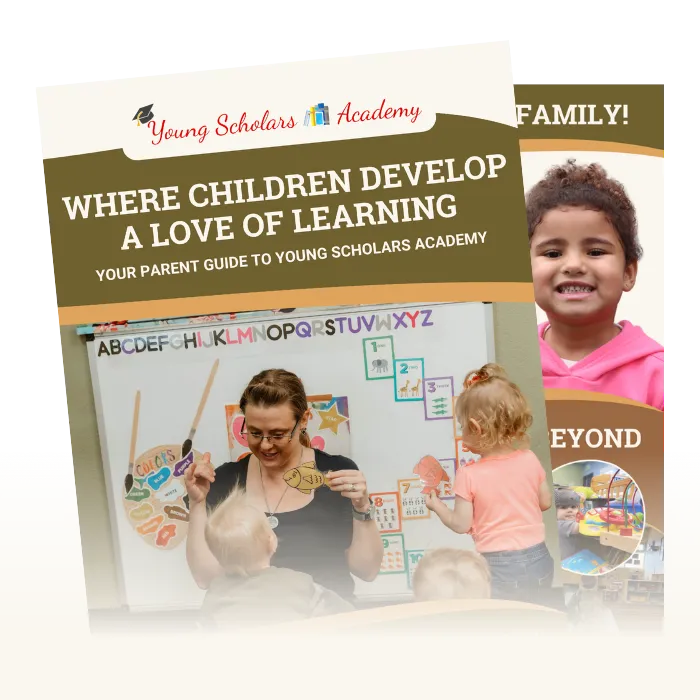
Everything You Need To Know About Young Scholars Academy
Discover our programs, learning experiences, and what makes Young Scholars Academy a special place for your child to learn, grow, and thrive.
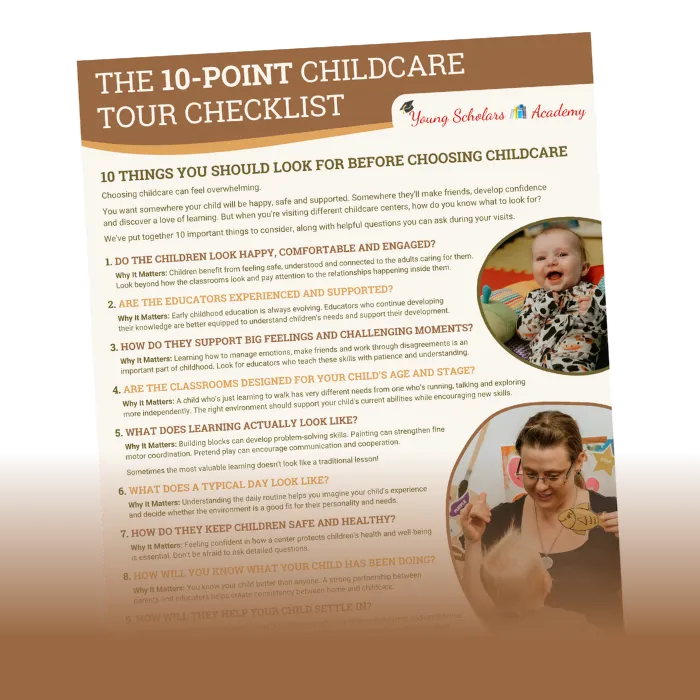
Find The Right Childcare With Confidence
Not sure what to look for when touring a childcare center? Our free checklist helps you ask the right questions and make an informed decision for your family.
Frequently Asked Questions
You've Got Questions. We've Got Answers!
From starting childcare to navigating developmental milestones, explore helpful answers to some of the questions parents ask us most.
Starting Childcare
Will daycare affect my baby's attachment to me?
Starting daycare doesn't have to weaken your baby's attachment to you! In fact, it's healthy for babies to develop secure, trusting relationships with caring adults beyond their immediate family. These relationships help infants build confidence, feel safe in new environments, and learn that they can depend on others to meet their needs.
And here's something important to remember: Your baby's bond with you isn't weakened by the love and care they receive from someone else. Having trusted caregivers can also give parents the support they need to be more present and intentional during their time together.
Love and trust aren't limited resources. There's room for both!
How do I prepare my child for daycare?
Start small! Practice short separations, talk positively about their new school, and establish a consistent goodbye routine. Children thrive on predictability, so sharing your child's routines, preferences, and comfort strategies with their teachers can make a big difference.
Remember, adjusting takes time! Your child doesn't need to arrive knowing how to do everything. Building trust, confidence, and independence is part of the journey, and we're here to support them every step of the way.
I'm about to tour my first daycare. What should I look for?
Look beyond the colorful classrooms! Pay attention to how teachers interact with children. Are they warm, engaged, and responsive? Ask about teacher qualifications, safety practices, daily routines, and how the center communicates with families.
Most importantly, look for a place where children feel safe, valued, and encouraged to explore. A quality childcare program should welcome your questions, be transparent about its practices, and make you feel confident in your decision.
Remember, you're not just choosing a daycare. You're choosing a partner in your child's development!
Should I wait until my child can talk before starting daycare?
Not necessarily! Children communicate long before they begin speaking through facial expressions, gestures, sounds, and body language. Experienced early childhood educators are trained to recognize and respond to these important cues.
Quality childcare can also support early language development through meaningful interactions, songs, stories, and everyday conversations.
Your child doesn't need words to have a voice. They need caring adults who know how to listen!
Parenting & Child Development
Is it normal to feel guilty about wanting to work instead of staying home with my child?
Absolutely! Loving your child and loving your independence aren't mutually exclusive. It's completely normal to experience mixed emotions when balancing parenthood, personal goals, and a career.
Quality childcare provides opportunities for children to build relationships, explore new environments, and develop social-emotional skills while parents pursue their own goals.
Choosing childcare doesn't mean you're choosing less time to love your child. It means you're building a support system that allows your whole family to grow.
Daycare costs as much as my mortgage! Is it really worth it?
We get it! Childcare is one of the biggest investments families make, and it's completely reasonable to question the cost.
Quality childcare is about more than supervision. You're investing in qualified educators, safe environments, meaningful relationships, and intentional learning experiences that support your child's development during some of their most formative years.
The right childcare program shouldn't just give you peace of mind while you work. It should give your child opportunities to learn, grow, and thrive!
How do I get my child to listen to me?
Start with connection before correction! Young children are still developing the ability to manage impulses, follow directions, and regulate their emotions. What looks like defiance may simply be a skill they're still learning.
Get down to your child's eye level, give short and clear instructions, offer simple choices, and allow time for them to respond. Consistency, patience, and positive reinforcement go a long way!
Remember, the goal isn't immediate obedience. It's teaching children how to listen, understand expectations, and make good choices as they grow!
Potty Training
My child is showing signs of potty training. Where should I start?
Start by following your child's lead! Signs of readiness include staying dry for longer periods, showing interest in the toilet, recognizing when they're wet or soiled, and communicating when they need to go.
Introduce the potty without pressure, establish predictable bathroom routines, and celebrate small successes! Remember, accidents are a normal part of learning, and consistency between home and school makes a big difference.
Potty training isn't a race. It's a developmental milestone that takes patience, encouragement, and teamwork!
Should my child be potty trained by their third birthday?
Age 3 can be a helpful milestone to work toward, but every child develops at their own pace! Many children begin showing signs of potty training readiness between 18 and 30 months, making the toddler years a great time to introduce healthy bathroom habits.
Learning to use the toilet helps children build independence, recognize their body's signals, and develop confidence in their abilities.
Rather than waiting for a specific age, look for readiness signs and introduce opportunities for practice when your child is ready.
Our advice? Keep it positive, be patient, and partner with your child's teachers to build consistency between home and school!
I'm about to tour my first daycare. What should I look for?
Look beyond the colorful classrooms! Pay attention to how teachers interact with children. Are they warm, engaged, and responsive? Ask about teacher qualifications, safety practices, daily routines, and how the center communicates with families.
Most importantly, look for a place where children feel safe, valued, and encouraged to explore. A quality childcare program should welcome your questions, be transparent about its practices, and make you feel confident in your decision.
Remember, you're not just choosing a daycare. You're choosing a partner in your child's development!
Should I wait until my child can talk before starting daycare?
Not necessarily! Children communicate long before they begin speaking through facial expressions, gestures, sounds, and body language. Experienced early childhood educators are trained to recognize and respond to these important cues.
Quality childcare can also support early language development through meaningful interactions, songs, stories, and everyday conversations.
Your child doesn't need words to have a voice. They need caring adults who know how to listen!
Preschool Readiness
Is preschool really necessary, or can my child learn everything in kindergarten?
While preschool isn't required for every child to succeed, it can provide a valuable foundation for kindergarten and beyond!
Preschool is about much more than learning letters, numbers, and shapes. Children develop important social-emotional skills, practice problem-solving, build independence, and learn how to navigate friendships and group settings.
Kindergarten builds on many of these foundational skills, and children who have opportunities to practice them beforehand may feel more confident and prepared.
Preschool isn't about rushing childhood. It's about giving children the tools to thrive in the next chapter of it!
How do I know if my child is ready for preschool?
Preschool readiness isn't about knowing the alphabet, counting to 20, or being completely independent! It's about showing an interest in exploring, learning, and connecting with others.
Some encouraging signs include curiosity about other children, beginning to follow simple directions, communicating basic needs, and showing interest in doing things independently.
Remember, skills like sharing, managing emotions, and navigating friendships are developed during preschool, not necessarily before it!
Your child doesn't need to have everything figured out before starting preschool. That's what preschool is for!

Discover What Learning Looks Like At Young Scholars Academy
The best way to understand our curriculum is to see it in action.
Come and meet our educators, explore our classrooms and discover how we're helping children develop a love of learning, one little breakthrough at a time.
We are currently recruiting
Click here to find out more.