 5815 Tutt Center Point - Colorado Springs, CO 80922

What is creative curriculum in preschool? It is a question many families ask as they begin exploring early childhood education options for their child. The Creative Curriculum is a widely used teaching approach that supports learning through hands-on experiences, purposeful play, and meaningful teacher guidance.
Rather than focusing only on academics, it helps children grow across important areas such as language, social skills, problem-solving, movement, and confidence. For parents, understanding how this curriculum works can make it easier to recognize the value of a preschool environment that encourages curiosity, independence, and age-appropriate development in a thoughtful, supportive setting.
Teaching Strategies Creative Curriculum Explained
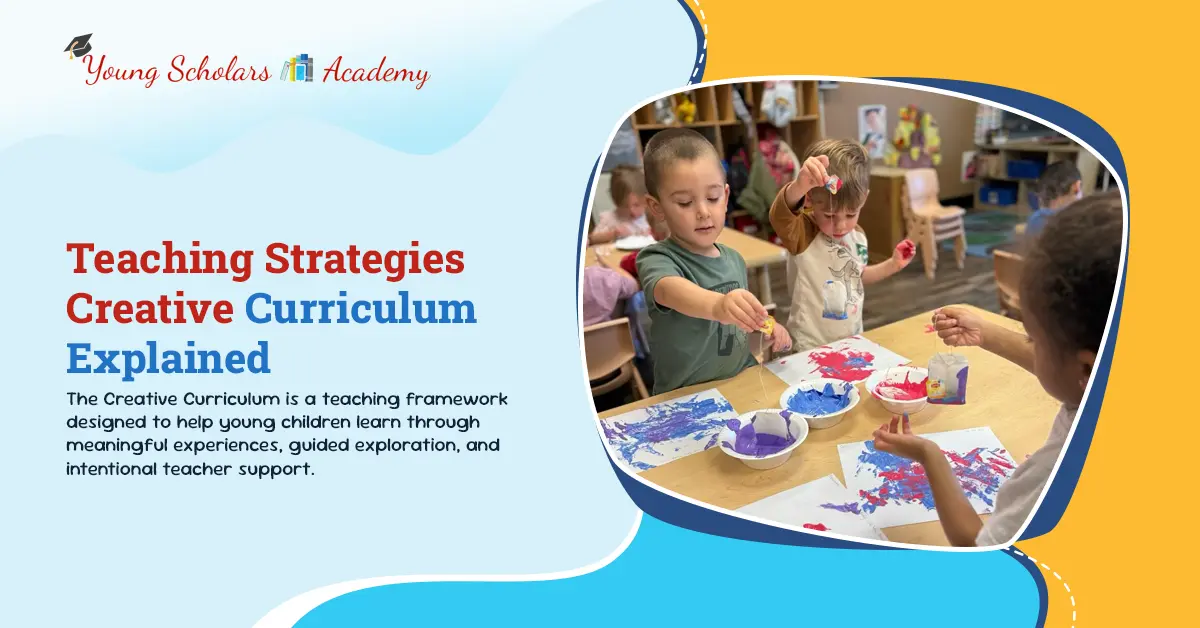
The Creative Curriculum is a teaching framework designed to help young children learn through meaningful experiences, guided exploration, and intentional teacher support. Instead of relying solely on direct instruction, it focuses on how children develop best through play, discovery, conversation, routines, and hands-on learning opportunities. This approach supports the whole child by building academic readiness alongside social, emotional, physical, and cognitive growth.
A Child-Centered Approach to Learning
At the heart of this model is the belief that children learn most effectively when they are actively involved in the learning process. Teachers create engaging experiences based on children’s interests, developmental stages, and individual needs. This makes learning feel natural, purposeful, and relevant rather than forced or overly rigid.
Purposeful Play With Teacher Guidance
Play is an important part of the Creative Curriculum, but it is not unstructured time without direction. Teachers carefully plan activities, ask thoughtful questions, introduce new vocabulary, and guide children toward deeper understanding. For example, a block area can support counting, problem-solving, teamwork, and early engineering concepts simultaneously.
Learning Through Daily Experiences
Children are encouraged to grow through everyday classroom experiences such as:
- circle time discussions
- small group activities
- dramatic play
- art and sensory exploration
- outdoor learning
- read alouds and storytelling
Each part of the day is used as an opportunity to build skills in a supportive and engaging way.
Ongoing Observation and Individual Support
Another key part of the Creative Curriculum is observation. Teachers watch how children interact, solve problems, communicate, and respond to new tasks. These observations help educators adjust lessons, provide the right level of support, and celebrate each child’s progress. This allows learning to remain flexible, responsive, and developmentally appropriate for every student.
How Creative Curriculum Works in Preschool Classrooms
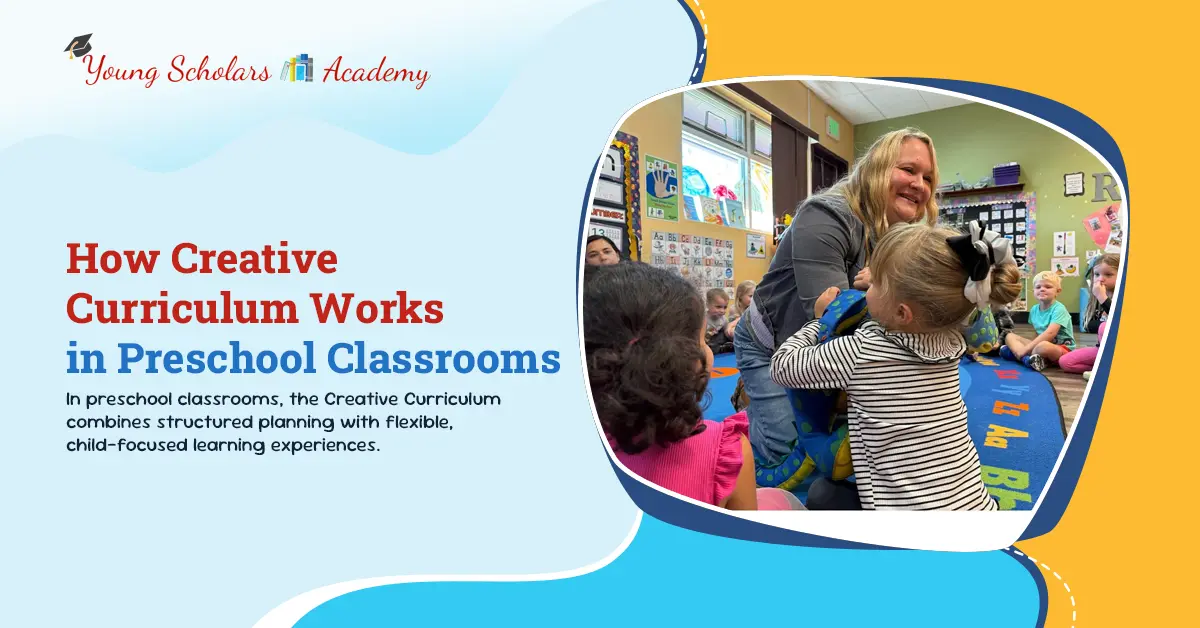
In preschool classrooms, the Creative Curriculum combines structured planning with flexible, child-focused learning experiences. Teachers do not simply move children through a fixed set of lessons. Instead, they build the day around clear developmental goals while also responding to children’s interests, questions, and progress. This creates a classroom environment that feels engaging, supportive, and purposeful.
Organized Learning Through Interest Areas
A Creative Curriculum classroom is often arranged into interest areas that encourage different types of learning. These spaces help children explore independently and with guidance. Common areas may include:
- blocks and building
- dramatic play
- reading and literacy
- art and creativity
- science and discovery
- sensory exploration
Each area is designed to support hands-on learning while giving teachers opportunities to introduce concepts naturally.
Daily Routines With Intentional Purpose
The daily schedule plays an important role in how this curriculum works. Preschool teachers use routines such as arrival, circle time, small group learning, center time, outdoor play, meals, and transitions as opportunities to build skills. A simple activity can support multiple areas of development at once, including communication, cooperation, early math, and self-help abilities.
Teacher Planning and Responsive Instruction
Teachers use observations to plan activities that match children’s developmental levels and classroom needs. If children show strong interest in gardens, weather, or community helpers, those topics may be woven into books, art projects, group discussions, and play experiences. This helps learning feel connected and meaningful.
Assessment That Supports Growth
The Creative Curriculum also includes ongoing assessment. Rather than depending only on formal testing, teachers document what children can do, how they interact, and where they may need support. This information helps educators adjust instruction, communicate with families, and create a classroom experience that supports steady, well-rounded growth.
Benefits of Creative Curriculum for Early Childhood Learning
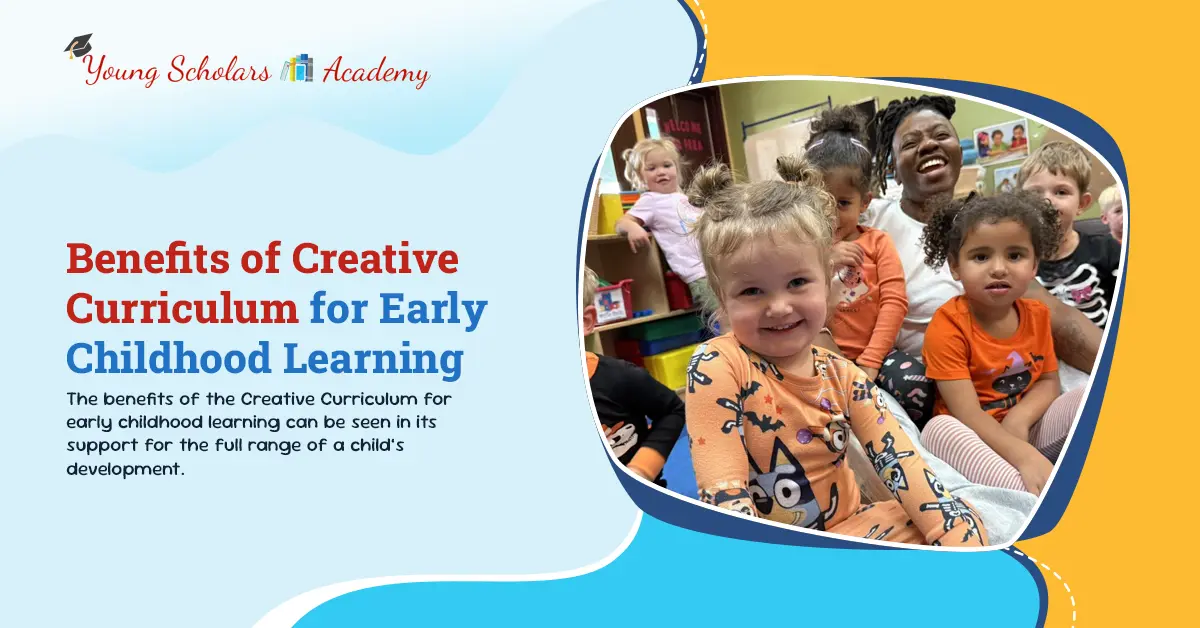
The benefits of the Creative Curriculum for early childhood learning can be seen in its support for the full range of a child’s development. Rather than focusing on a single area, this approach helps children build academic foundations while also strengthening confidence, communication, independence, and social understanding. Because learning is active and meaningful, children are often more engaged in the classroom and more prepared to apply new skills in everyday situations.
Supports the Whole Child
One of the greatest strengths of this curriculum is its whole-child focus. Children are given opportunities to grow in several key areas at once, including:
- language and early literacy
- problem solving and critical thinking
- social and emotional development
- physical coordination
- independence and self-regulation
This balanced approach helps children develop skills that support both school readiness and long-term success.
Encourages Active and Meaningful Learning
Young children learn best when they are involved in the process. The Creative Curriculum encourages children to ask questions, explore materials, make choices, and learn through experience. This kind of active participation can make lessons more memorable and developmentally appropriate. It also helps children build curiosity and a positive attitude toward learning.
Builds Confidence Through Individual Growth
Because teachers observe each child and respond to their needs, learning can be adjusted to provide the right level of challenge and support. Children are not expected to learn in the same way or at the same pace. This can lead to greater confidence, as children are given space to practice new skills, solve problems, and experience success in ways that feel achievable.
Strengthens School Readiness
The Creative Curriculum helps prepare children for future learning by building important early foundations in literacy, math, listening, routines, cooperation, and attention. At the same time, it nurtures creativity, independence, and emotional growth. Together, these benefits create a strong foundation for a positive, successful start in kindergarten and beyond.
Core Developmental Areas Supported by the Curriculum
A strong early childhood curriculum should do more than introduce basic academic concepts. It should also support the broader areas of growth that shape how children learn, relate to others, and build independence. The Creative Curriculum is designed with this full picture in mind, helping children develop across multiple domains in ways that are connected, age-appropriate, and meaningful in daily classroom life.
Language and Early Literacy Development
Children are supported in building communication skills through conversations, storytelling, songs, read-alouds, and print-rich classroom experiences. These opportunities help strengthen:
- vocabulary growth
- listening and comprehension
- expressive language
- early writing awareness
- alphabet and sound recognition
These skills form an important foundation for later reading and writing success.
Social and Emotional Growth
Preschool is also a time when children learn to interact with others, manage emotions, and become part of a group. Through guided play, routines, and teacher support, children begin to practice sharing, taking turns, expressing feelings, and solving simple conflicts. They also build confidence as they learn to make choices and participate more independently.
Cognitive and Problem-Solving Skills
The curriculum encourages children to think, question, explore, and make connections. Activities involving sorting, counting, comparing, building, experimenting, and predicting help develop early cognitive skills. Rather than memorizing information in isolation, children are given opportunities to apply what they are learning through hands-on experiences that support reasoning and flexible thinking.
Physical Development and Independence
Young children also need support in building both fine motor and gross motor abilities. Classroom activities such as drawing, cutting, painting, climbing, dancing, and outdoor play help strengthen coordination and control. At the same time, children are encouraged to practice everyday tasks such as handwashing, cleaning up, serving themselves, and managing personal belongings. These experiences promote independence and help children feel capable in their daily routines.
Together, these developmental areas create a balanced foundation that supports readiness for kindergarten and continued growth beyond the preschool years.
Conclusion
Understanding the Creative Curriculum can help parents feel more confident when evaluating an early childhood education program. This approach is designed to support more than just academic readiness. It encourages children to grow through meaningful experiences that build communication, confidence, problem-solving skills, independence, and strong social development. When used thoughtfully in a preschool setting, it creates a balanced foundation for learning that respects how young children naturally explore and grow. For families, that means choosing a program that not only prepares children for kindergarten, but also supports their overall development in a warm, purposeful environment.
To learn more about Young Scholars Academy and connect with their team, call (719) 522-9099 or visit https://youngscholarsacademycolorado.com/contact-us/.