 5815 Tutt Center Point - Colorado Springs, CO 80922

A toddler program that builds independence gives young children meaningful opportunities to make choices, practice self-help skills, and develop confidence in a safe, supportive environment. During the toddler years, children begin to form a stronger sense of identity and show a growing desire to complete tasks on their own.
A well-designed program supports this stage through consistent routines, age-appropriate responsibilities, hands-on learning, and patient guidance from trusted educators. When children are encouraged to try, make mistakes, and try again, they develop resilience, problem-solving skills, and a positive attitude toward learning that can support future growth.
How Toddler Social and Emotional Development Supports Independence
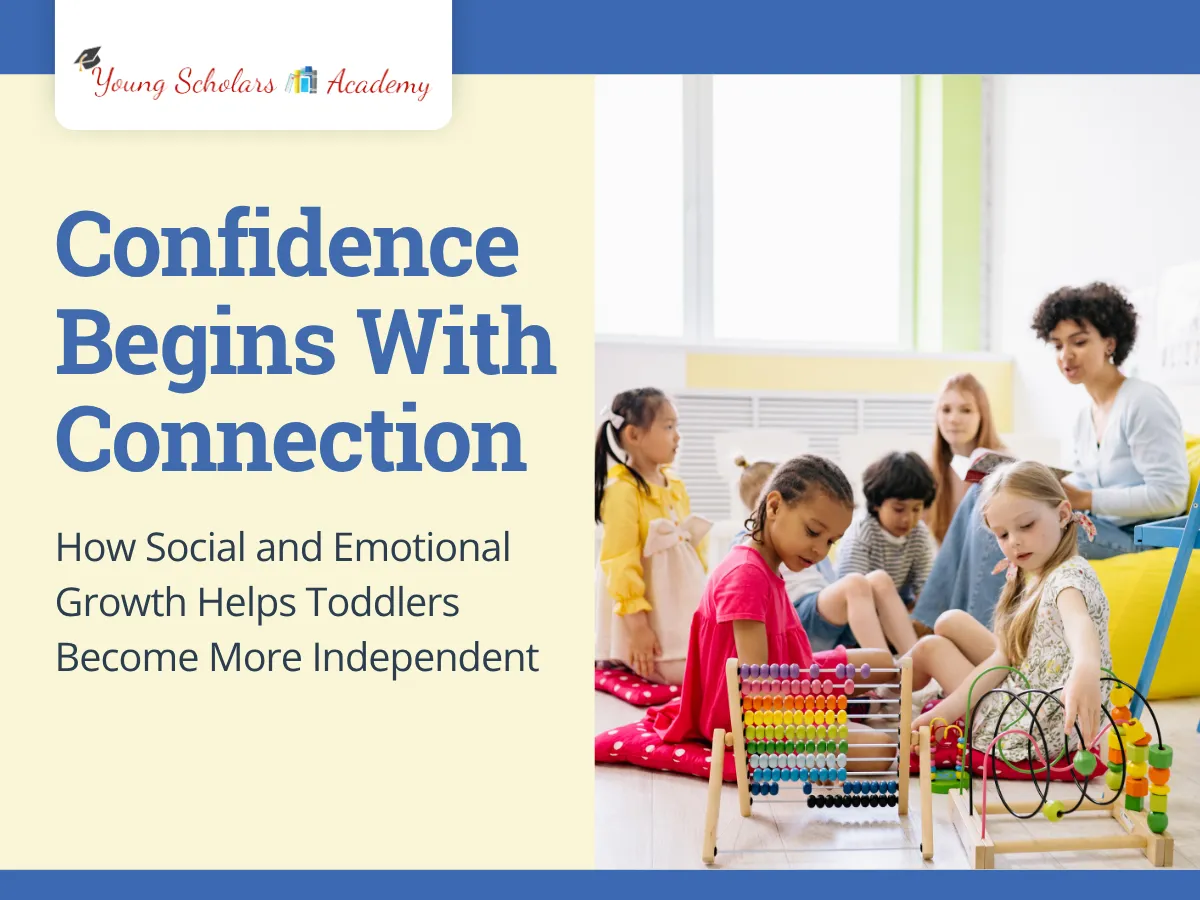
Toddler social and emotional development plays an important role in helping children become more confident, capable, and willing to try new tasks. Before toddlers can act independently, they need to feel secure in their environment and trust the adults who care for them. Consistent relationships, predictable responses, and patient guidance give children the confidence to explore while knowing support is available when needed.
Secure Relationships Create Confidence
When toddlers form strong relationships with educators, they are more comfortable moving away from direct adult support to investigate materials, join activities, and interact with classmates. A trusted educator can provide reassurance without immediately taking over. This balance helps children learn that they can attempt a task, manage small challenges, and return for support when necessary.
Emotional Skills Support Everyday Choices
Independence also depends on a child’s ability to recognize and manage emotions. Toddlers may feel frustrated when a block tower falls, a preferred toy is unavailable, or a task takes longer than expected. Educators can support emotional growth by naming feelings, modeling calm responses, and offering simple choices.
For example, children may be encouraged to:
- Choose between two appropriate activities
- Ask for help using simple words or gestures
- Wait briefly for a turn
- Try a different approach when something does not work
- Participate in calming routines when emotions feel overwhelming
These experiences teach toddlers that difficult feelings can be managed rather than avoided.
Positive Peer Experiences Build Self-Awareness
Group activities also help toddlers understand how their actions affect others. Sharing materials, taking turns, helping with cleanup, and participating in classroom routines give children opportunities to practice cooperation while developing a sense of responsibility.
As toddlers gain social and emotional skills, they become better prepared to make choices, communicate their needs, solve simple problems, and take part in daily tasks with greater confidence. Independence develops gradually, supported by relationships that help each child feel safe enough to grow.
Supporting Independent Learning for Toddlers Through Meaningful Choices
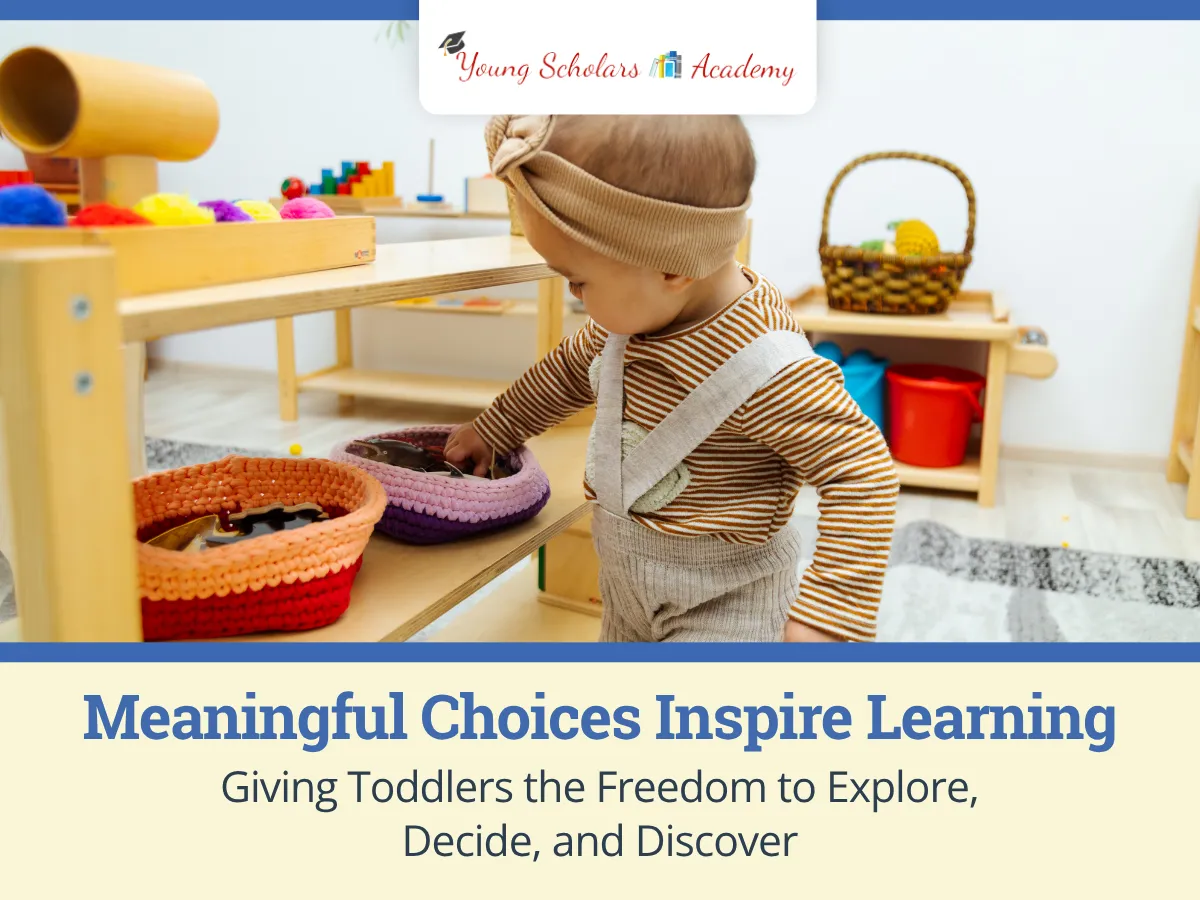
Independent learning for toddlers begins when children are given appropriate opportunities to make decisions and take an active role in their experiences. Meaningful choices help toddlers understand that their ideas matter while allowing educators to maintain a safe, structured learning environment.
Offering Limited, Age-Appropriate Options
Toddlers can become overwhelmed when presented with too many possibilities. Educators can support confident decision-making by offering two or three suitable options, such as choosing between puzzles and blocks or selecting a book for group reading.
These simple decisions encourage children to:
- Identify their interests and preferences
- Communicate their choices
- Follow through with an activity
- Understand that different options may lead to different outcomes
Making small choices throughout the day gradually prepares toddlers for more complex decisions as they grow.
Encouraging Exploration and Problem-Solving
Independent learning does not mean children complete every task without assistance. It means they are given time to observe, experiment, and consider possible solutions before an adult steps in.
For example, a toddler working with a shape sorter may rotate a piece several times before finding the correct opening. An educator can offer a gentle prompt rather than placing the shape for the child. This approach protects the learning process and allows the child to experience the satisfaction of solving the problem.
Respecting Individual Interests and Learning Styles
Toddlers do not all explore materials in the same way or at the same pace. One child may study an activity carefully before participating, while another may begin immediately through hands-on experimentation. A responsive program provides varied materials and flexible opportunities that allow each child to engage meaningfully.
When educators observe children closely and build on their interests, toddlers become more invested in learning. They begin to approach unfamiliar activities with curiosity, persistence, and growing confidence in their abilities.
How Toddler Classroom Routines Build Confidence and Responsibility
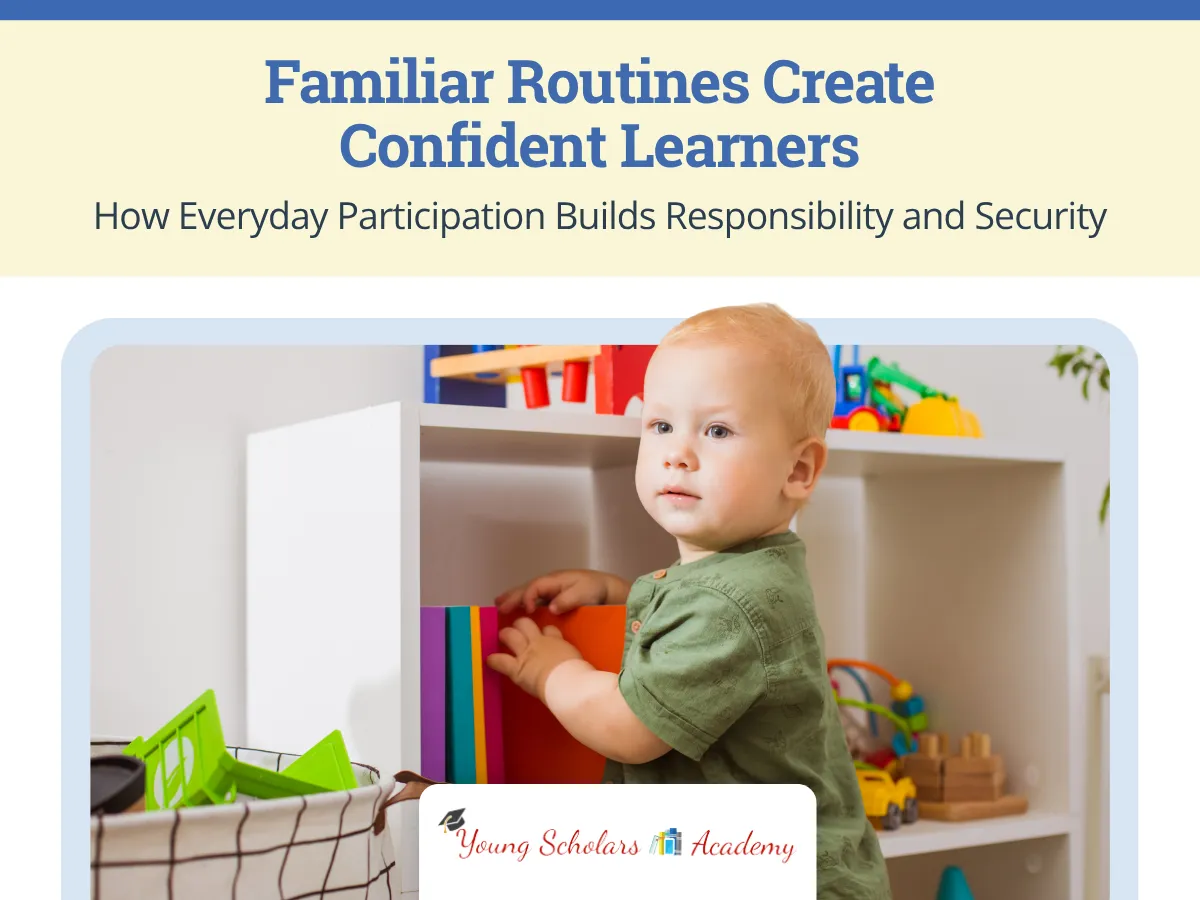
Toddler classroom routines provide the predictability young children need to feel secure and participate more independently. When the order of the day remains consistent, toddlers begin to understand what is happening, what will happen next, and how they can contribute.
Predictability Reduces Uncertainty
Toddlers are still developing their understanding of time and transitions. A dependable schedule helps make the day easier to follow. Familiar sequences, such as arriving, putting away belongings, joining an activity, eating meals, resting, and preparing to go home, create a reassuring sense of order.
Educators can reinforce routines through visual cues, familiar songs, simple instructions, and regular reminders. Over time, children rely less on direct adult guidance because they begin to recognize each part of the day.
Everyday Participation Builds Responsibility
Classroom routines also provide natural opportunities for toddlers to contribute. Responsibilities should remain simple, achievable, and appropriate for each child’s developmental stage.
Toddlers may help by:
- Returning toys and materials to designated spaces
- Placing cups or napkins on the table
- Carrying personal items to a cubby
- Choosing a book for group time
- Helping prepare an area for the next activity
These tasks help children understand that they are valued members of the classroom community.
Consistent Transitions Encourage Cooperation
Moving from one activity to another can be challenging for toddlers, particularly when they are deeply involved in play. Clear warnings and familiar transition practices allow children time to prepare emotionally.
An educator might explain that cleanup will begin after one more turn or use the same song each day to signal a change. These strategies support cooperation without placing unrealistic expectations on young children.
Through consistent toddler classroom routines, children develop greater awareness, patience, and confidence. They learn how to anticipate daily events, manage transitions, and take increasing responsibility for their environment.
Developing Practical Self-Help Skills in a Toddler Program
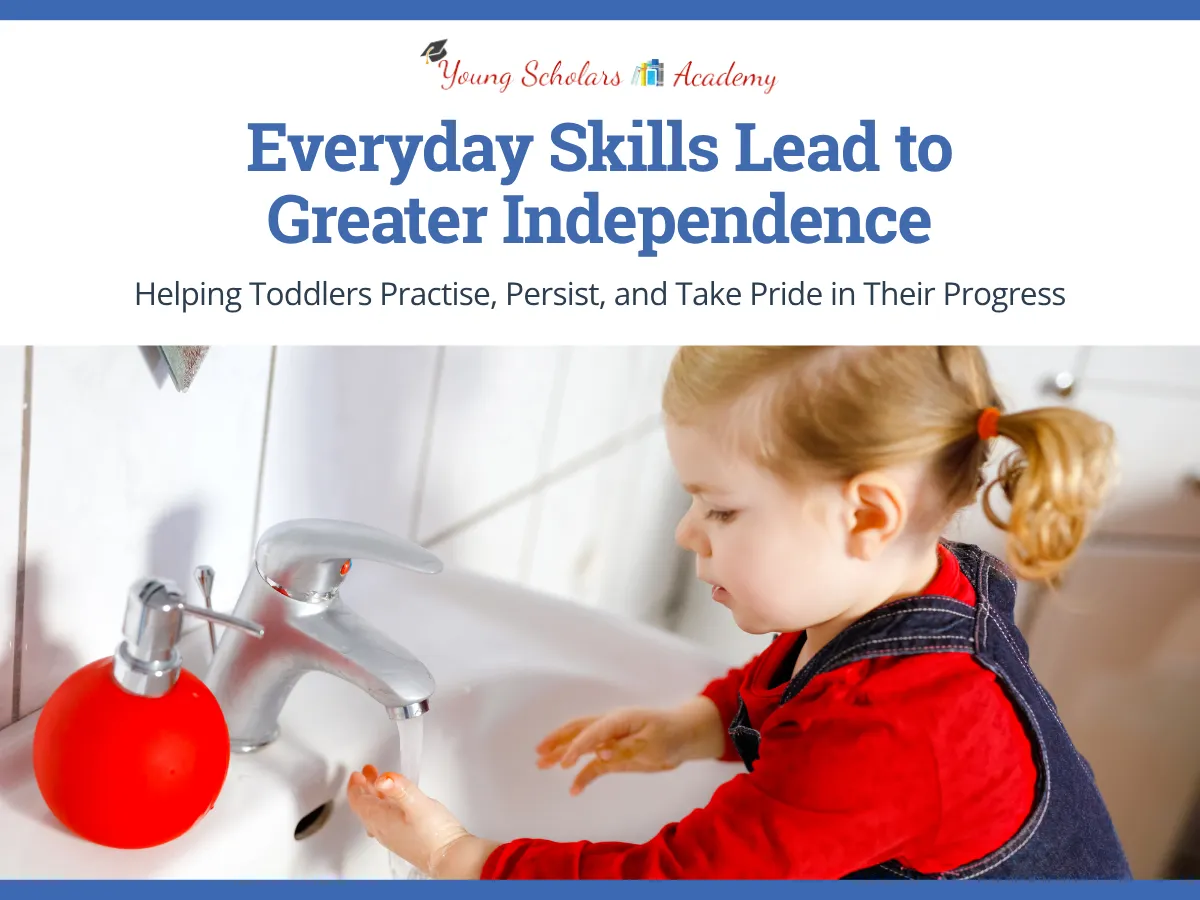
Practical self-help skills allow toddlers to participate more fully in their care and daily experiences. A supportive toddler program introduces these abilities gradually, giving children the time, tools, and encouragement they need to practice without unnecessary pressure.
Breaking Tasks Into Manageable Steps
Everyday activities often involve several steps that may feel complex to a young child. Educators can make these tasks more accessible by demonstrating one step at a time and using clear, consistent language.
For example, putting on a coat may involve finding the sleeves, placing each arm inside, pulling the coat into position, and attempting the fastener. A toddler may initially complete only one part independently. With regular practice, the child can take responsibility for more of the process.
Creating Opportunities for Daily Practice
Self-help skills become stronger when children can practice them as part of their normal routine. Useful experiences may include:
- Washing and drying hands
- Using utensils during meals
- Drinking from an age-appropriate cup
- Putting on or removing simple clothing
- Carrying and storing personal belongings
- Cleaning small spills with assistance
Child-sized furniture, accessible storage, and appropriately designed materials can make these activities safer and easier to complete.
Knowing When to Guide and When to Wait
Adults may be tempted to complete tasks quickly for toddlers, especially when a child appears frustrated. However, providing a little extra time can communicate confidence in the child’s abilities. Educators can remain nearby, offer verbal encouragement, or assist only with the most difficult step.
The goal is not immediate mastery. It is steady progress supported by patience and realistic expectations.
As toddlers develop practical self-help skills, they gain more than physical ability. They also build persistence, coordination, decision-making skills, and pride in their accomplishments. These daily successes help children see themselves as capable learners who can contribute to their own care and classroom community.
Conclusion
Independence develops through many small experiences that help toddlers feel secure, capable, and proud of what they can accomplish. Meaningful choices, consistent classroom routines, supportive relationships, and practical self-help opportunities all contribute to this growth. When children are given time to practice, solve simple problems, and participate in daily responsibilities, they begin to trust their abilities and approach new experiences with greater confidence.
Learn how Young Scholars Academy supports confident growth in the toddler years. Call (719) 522-9099 or visit https://youngscholarsacademycolorado.com/contact-us/.
Leave a Reply