[email protected]

Young Scholars Academy

Where Children Develop a Love of Learning

  • Home
  • Summary of Programs
    • Infant Childcare Program in Colorado Springs
    • Toddler Care Program in Colorado Springs
    • Preschool Program in Colorado Springs
    • Prekindergarten Program in Colorado Springs
    • Before and After School Program
    • Summer Camp
  • Resources
    • Family Resources
    • Additional Benefits
  • About Us
    • Our Child Care Team
    • Contact Us
Location Icon  5815 Tutt Center Point - Colorado Springs, CO 80922
Phone Icon  (719) 522-9099
Book a Tour
  • Programs
    • Infant Program
    • Toddler Program
    • Preschool Program in Colorado Springs
    • Prekindergarten Program in Colorado Springs
    • Junior Kindergarten
  • School Age Programs
    • Before and After School Program
    • Summer Camp
  • Enrichment Programs
    • Curriculum Ideas For Home | Young Scholars Academy
    • Art Projects
    • American Sign Language
    • Music & Fitness
  • Blog

Are We Forgetting Kindergarten Readiness?

August 12, 2026 by Jordan Leave a Comment

Social-Emotional Skills Matter—But Are We Forgetting Kindergarten Readiness?

There has been an important shift in early childhood education over the last several years: parents are paying more attention to their children’s social and emotional development.

And we LOVE that.

Helping a four-year-old recognize emotions, build friendships, communicate their needs, handle frustration, solve problems, and develop independence is incredibly important. These skills affect how children learn, how they interact with others, and how they feel about themselves.

But somewhere along the way, we may have started treating social-emotional development and academic preparation as though parents have to choose between them.

They don’t.

A child can be emotionally supported, play every day, build meaningful relationships and be intentionally prepared for kindergarten.

In fact, that’s exactly what a strong Pre-K experience in Colorado Springs, should provide.

Kindergarten Readiness Is More Than Knowing the ABCs

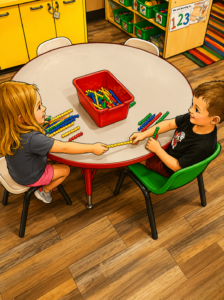
Are We Forgetting Kindergarten Readiness?When we talk about “academics” for four-year-olds, we’re not talking about expecting preschoolers to sit at desks completing worksheets all day.
We’re talking about giving children the foundational skills they will soon be expected to build upon.

Before kindergarten, children benefit from experiences that help them learn things like:

  • How to hold and control a pencil, crayon, marker, and scissors
  • How to recognize and begin forming letters
  • How to recognize numbers and understand basic number concepts
  • How to recognize their own written name
  • How to confidently share their first and last name
  • How to begin learning important personal information, such as their birthday
  • How to listen to and follow multi-step directions
  • How to participate in a group learning experience
  • How to ask questions and attempt something even when they aren’t sure of the answer
  • How to care for their belongings and complete increasingly independent tasks

These may seem like simple skills to adults. To a four-year-old, however, they represent months and years of developing fine-motor coordination, language, memory, attention, confidence, and practice.

And that’s why the year before kindergarten matters so much.

Confidence Is a School-Readiness Skill, Too

One of our biggest goals isn’t simply teaching children what to know.

It’s helping them believe that they are capable of learning.

There’s something powerful about watching a child go from saying, “I can’t do it,” to proudly announcing, “Look! I did it!”

That confidence develops when children are given developmentally appropriate challenges, patient teachers, opportunities to practice, and an environment where mistakes are simply part of learning.

A child who enters kindergarten already comfortable holding writing tools, recognizing familiar letters and numbers, participating in group activities, and attempting new tasks has something incredibly valuable:

familiarity.

Kindergarten won’t be the first time they’ve been asked to do these things.

That doesn’t mean they’ll know everything. They aren’t supposed to.

It means they’ll have a foundation to build upon.

Social-Emotional Development and Academics Work Together

Here’s the part we think sometimes gets lost in the conversation: academic development and social-emotional development aren’t competing priorities.

They’re connected.

A child uses emotional regulation when a puzzle is difficult.

They use confidence when attempting to write their name.

They use communication skills when asking a teacher for help.

They practice patience while waiting for a turn during a classroom activity.

They develop independence when they gather their materials, complete a task, and clean up afterward.

And they experience pride when they realize they just accomplished something they couldn’t do a few months ago.

Learning is social-emotional development in action.

That’s why high-quality early childhood education shouldn’t focus exclusively on one side of kindergarten readiness.

Children need both.

Four-Year-Olds Don’t Need Pressure. They Need Preparation.

There’s a huge difference between pushing a four-year-old academically and preparing a four-year-old developmentally.

Preparation doesn’t mean hours of worksheets.

It looks like tracing letters in sand.

Counting how many friends are at the table.

Writing a name on artwork.

Using scissors during an art project.

Recognizing the letter on a classroom sign.

Talking about birthdays during calendar time.

Following directions while cooking something together.

Listening to a story and predicting what might happen next.

Learning through play, conversation, movement, exploration, repetition, and intentional teaching.

To a child, much of it feels like play.

To an experienced early childhood teacher, there is a tremendous amount of learning happening underneath it.

The Goal Isn’t to Create a “Perfect” Kindergartner

Every child develops differently. Some children will enter kindergarten writing their full name beautifully. Others will still be working on letter formation. Some will count far beyond expectations, while another child’s greatest accomplishment may be confidently speaking in front of a group.

That’s okay.

Kindergarten readiness isn’t a checklist that determines whether a child is “smart enough.”

It’s about giving children as many tools as possible before they take their next big step.

We want children entering kindergarten knowing how to make a friend and how to hold a pencil.

We want them able to name their emotions and recognize their name in print.

We want them comfortable asking for help and excited to try something independently.

We want them to know that mistakes are okay, questions are encouraged, learning can be fun, and they are capable of doing hard things.

Because social-emotional health matters tremendously.

But our four-year-olds deserve the whole picture.

They deserve relationships.

They deserve play.

They deserve emotional support.

They deserve academics.

And most importantly, they deserve an early childhood experience that intentionally prepares them to walk into kindergarten feeling confident, capable, curious, and ready to learn.

Filed Under: Activities

We Don’t Use Candy for Potty Training

August 5, 2026 by Jordan Leave a Comment

Why We Don’t Use Candy for Potty Training at Young Scholars Academy

For decades, parents have heard the same advice:

“Just give them an M&M every time they use the potty.”

It sounds harmless, and for some children it may even work in the short term. But at Young Scholars Academy, we’ve chosen a different approach—one that’s focused on building confidence, independence, and healthy lifelong habits.

Instead of rewarding children with food, we celebrate their success with encouragement, praise, stamp charts, fun stamps, temporary tattoos, and lots of excitement from their teachers.

Here’s why.

Potty Training Should Build Independence—Not Dependence

The goal of potty training isn’t simply getting a child to use the toilet.

The goal is helping children recognize their body’s signals, make independent choices, and feel proud of themselves.

When the reward becomes a piece of candy or a cookie, children can begin focusing more on earning the treat than learning the actual skill.

Eventually, the reward disappears—but the habit still needs to remain.

Instead, we want children to think:

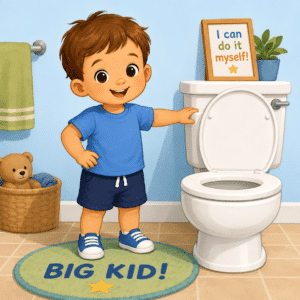
We Don't Use Candy for Potty Training“I did it!”

Not:

“What do I get?”

Food Should Never Feel Like a Prize

Research has shown that regularly using food as a reward may unintentionally change how children think about eating.

Children naturally regulate hunger and fullness remarkably well. When sweets become rewards for good behavior or accomplishments, it can teach children that certain foods are more valuable or emotionally important than others.

While an occasional treat isn’t harmful, making food the primary motivator for learning new skills isn’t something we believe sets children up for long-term success.

Every Child Is Motivated Differently

One child may love stickers.

Another may proudly show off a stamp on their hand.

Another might be thrilled to add another square to their potty chart.

Children don’t all need sugar to feel successful.

What they really crave is recognition, encouragement, and celebrating accomplishments with the adults they trust.

What We Do Instead

At Young Scholars Academy, we use positive reinforcement that’s fun, age-appropriate, and supported by best practices in early childhood education.

Some of our favorite motivators include:

  • ⭐ Potty stamp charts
  • 🎉 Fun hand stamps
  • 🎨 Temporary tattoos
  • 👏 High-fives and cheers
  • 💚 Verbal praise
  • 📣 Celebrating milestones with classmates
  • 🌟 Helping children feel proud of themselves

These rewards create excitement without making food part of the equation.

Potty Training Is a Partnership

Successful potty training doesn’t happen overnight.

It happens when children receive consistent expectations both at home and at school.

Our teachers work closely with families to recognize readiness signs, celebrate progress, and support children through accidents without shame or punishment.

Every child learns at their own pace—and that’s okay.

Building Healthy Habits for Life

At Young Scholars Academy, we believe every milestone should help children become more independent, more confident, and more capable.

That’s why you’ll see plenty of stamps, smiles, cheers, and high-fives in our classrooms—but not candy.

Because the greatest reward isn’t a piece of chocolate.

It’s the smile on a child’s face when they realize:

“I can do this all by myself.”

Filed Under: Activities

Potty Training Before Three: Why Waiting Often Makes It Harder

July 24, 2026 by Jordan Leave a Comment

Potty Training Before Three: Why Waiting Often Makes It Harder

When it comes to potty training, there seems to be more conflicting advice than ever before.

Some parents hear, “Don’t push it. They’ll do it when they’re ready.”

Others are told to wait until preschool or let the teachers handle it.

At Young Scholars Academy, we believe something a little different.

Most children are capable of learning to use the toilet before their third birthday—with patience, consistency, and teamwork between home and school.

The goal isn’t perfection overnight.

The goal is helping children discover that “I can do this myself.”


Potty Training Is About More Than Using the Toilet

Parents often think potty training is simply about getting rid of diapers.

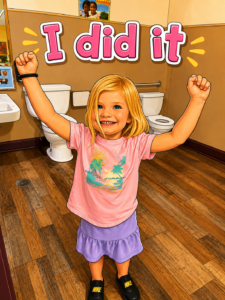
In reality, it’s one of the biggest milestones in early childhood because it teaches so many other life skills. potty training before three years old

As children learn to use the toilet, they’re also developing:

  • Independence
  • Confidence
  • Body awareness
  • Self-control
  • Following routines
  • Communication skills
  • Responsibility
  • Problem-solving

These are the exact same executive functioning skills they’ll continue building throughout preschool and into kindergarten.


Why Waiting Can Make It More Difficult

Many families are surprised to learn that delaying potty training doesn’t always make the process easier.

In fact, children who become very comfortable wearing diapers sometimes become less motivated to change.

Diapers are convenient.

Toilets require effort.

The longer children rely on diapers, the more they may resist learning a completely new routine.

Every child develops differently, but many pediatric experts agree that children between 24 and 36 months are in an excellent developmental window for learning this new skill.


Signs Your Child Is Ready

Rather than waiting for your child to announce they’re ready, look for these developmental signs:

✔ Staying dry for longer periods

✔ Showing interest in the bathroom

✔ Pulling pants up and down

✔ Following simple directions

✔ Communicating when they’re wet or dirty

✔ Wanting to copy adults or older children

Most children won’t display every sign perfectly before beginning. Potty training itself helps build these skills.


Why Consistency Matters

One of the biggest reasons potty training stalls isn’t because children can’t do it.

It’s because expectations change depending on where they are.

If children are encouraged to use the toilet at preschool but wear diapers all weekend at home, they’re receiving mixed messages.

Children thrive when everyone is working toward the same goal.

Even small, consistent routines make a huge difference.


Skip the Candy Rewards

Many parents immediately reach for M&Ms or gummy bears.

While they may create short-term excitement, food rewards don’t teach children why using the toilet is important.

Instead, celebrate the accomplishment itself.

Some wonderful alternatives include:

⭐ High fives

⭐ Sticker charts

⭐ Choosing the next bedtime story

⭐ Picking a special dance to celebrate

⭐ Ringing a “Potty Success Bell”

⭐ Letting your child flush the toilet

⭐ Extra praise focused on effort

Instead of saying:

“Good job!”

Try saying:

“You listened to your body!”

or

“You remembered to tell your teacher—you should be so proud!”

These types of praise help children build intrinsic motivation instead of expecting a prize every time they succeed.


What We Do at Young Scholars Academy

At Young Scholars Academy, potty training is a partnership.

Our teachers provide:

  • Gentle reminders throughout the day
  • Calm encouragement
  • Consistent routines
  • Lots of positive reinforcement
  • Patience when accidents happen
  • Celebration of every success

We never shame children for accidents.

Learning takes practice.

Just like learning to walk or write their name, every child gets there with encouragement and consistency.


The Goal Isn’t Perfection

Accidents are normal.

Learning takes time.

Some days will be amazing.

Others may feel like you’re starting over.

That’s okay.

Progress isn’t measured by one perfect day—it’s measured by growing confidence over time.


Let’s Work Together

One of the greatest gifts we can give children is the confidence to say,

“I did it myself.”

If your child is approaching their third birthday and you’re wondering where to begin, we’d love to partner with your family.

Together, we can make potty training a positive milestone that builds independence, confidence, and pride—not stress.

Filed Under: Family Tips

Is 18 Months the Perfect Time to Start Preschool?

June 29, 2026 by Jordan Leave a Comment

Is 18 Months the Perfect Time to Start Preschool? Why This Age Is Full of Opportunity

For many parents, 18 months feels like a crossroads.

Your little one isn’t quite a baby anymore, but they certainly aren’t a “big kid” either.

They’re climbing everything in sight, repeating new words every day, insisting on feeding themselves, and beginning to show a personality that’s larger than life.

Many parents ask us:

“Is my child too young for preschool?”

Our answer is often the opposite.

Eighteen months is one of the most exciting—and beneficial—times to introduce a child to a high-quality childcare or preschool program.

Your Baby Is Growing Into a Toddler

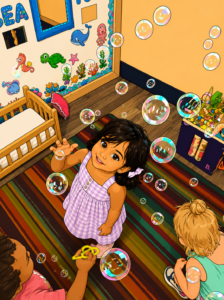
Is 18 Months the Perfect Time to Start Preschool?It’s completely normal to look at your 18-month-old and still see the tiny baby you brought home from the hospital.

But something remarkable is happening.

Your child is beginning to crave independence.

They’re learning to make choices.

They’re curious about everything.

They’re watching other children.

They’re absorbing language like a sponge.

This stage isn’t about taking them away from you.

It’s about giving them opportunities to discover what they’re capable of—with loving teachers by their side and you cheering them on every step of the way.

Why Starting Childcare Around 18 Months Can Be So Beneficial

Social Skills Begin to Bloom

At 18 months, children begin noticing other children in new ways.

While they may not be playing cooperatively just yet, they are learning by watching, imitating, and interacting.

In a quality preschool environment, toddlers begin practicing:

  • Taking turns
  • Using simple words to communicate
  • Following routines
  • Building friendships
  • Developing empathy
  • Learning alongside peers

These everyday interactions help lay the foundation for future social success.

Language Development Takes Off

One of the biggest developmental leaps around 18 months is language.

Children are constantly listening, repeating, pointing, singing, and learning new vocabulary.

A preschool classroom is filled with opportunities to expand language through:

  • Story time
  • Songs and music
  • Conversations
  • Sign language
  • Sensory play
  • Dramatic play
  • Everyday routines

The more meaningful conversations children experience, the stronger their communication skills become.

Independence Builds Confidence

Have you noticed your toddler insisting on doing everything themselves?

“I do it!”

While it can make mornings take a little longer, this is actually wonderful.

Learning to:

  • Wash hands
  • Put toys away
  • Feed themselves
  • Carry their own backpack
  • Help clean up
  • Make simple choices

teaches children something even more valuable than the task itself.

It teaches them:

“I can do hard things.”

That confidence carries into every stage of childhood.

Preschool Helps Build Routines

Toddlers thrive on predictable routines.

Daily schedules help children feel secure while learning what comes next.

Circle time.

Outdoor play.

Meals.

Naps.

Music.

Learning centers.

Transitions become easier because children know what to expect.

These routines also make the transition into preschool, Pre-K, and kindergarten much smoother.

Toilet Learning Starts With Readiness

Many parents are surprised to learn that successful toilet learning often begins before children ever sit on the potty.

In toddler classrooms, children observe bathroom routines, learn hygiene habits like handwashing, build independence with dressing skills, and become familiar with the process—all without pressure.

When children show signs of readiness, families and teachers can work together to create a consistent approach.

The result is often a smoother, less stressful toilet-training experience.

Learning Through Play Is Real Learning

Sometimes parents worry preschool means sitting at desks.

Nothing could be further from the truth.

At Young Scholars Academy, toddlers learn through purposeful play.

Every block tower builds problem-solving skills.

Every finger painting activity strengthens fine motor development.

Every dance party improves coordination.

Every story builds vocabulary.

Every outdoor adventure develops confidence.

To a toddler…

Play is learning.

It’s Okay to Let Your Child Spread Their Wings

One of the hardest parts of parenting is realizing your child is ready for more independence than you are.

That’s okay.

You will always be their safe place.

Preschool doesn’t replace that bond—it strengthens it.

Children return home excited to show you what they’ve learned, eager to tell you about new friends, songs they sang, and discoveries they made.

Their world grows a little bigger, while your connection remains just as strong.

Preschool Benefits Parents, Too

Starting preschool isn’t just good for children.

It can also help parents.

Knowing your child is spending the day learning, exploring, making friends, and being cared for by experienced educators provides peace of mind.

Many parents find they enjoy more meaningful evenings together because daily routines become more consistent, children are engaged throughout the day, and family time becomes focused on connection instead of constant stimulation.

Why Families Choose Young Scholars Academy

At Young Scholars Academy, we believe every child deserves a place where they feel safe, loved, challenged, and celebrated.

Our toddler program is designed specifically for curious 18-month-olds who are ready to explore, build confidence, and begin developing the academic, social, emotional, and life skills that prepare them for future success.

Because childhood isn’t something we rush.

It’s something we nurture.

Ready to Watch Your Toddler Thrive?

If you’ve been wondering whether now is the right time to introduce your 18-month-old to preschool, we’d love to show you what makes Young Scholars Academy different.

Schedule a tour, meet our teachers, and experience how a loving, play-based environment can help your toddler grow in confidence, independence, and joy—one discovery at a time.

Filed Under: Activities

Is Preschool Really Worth It? Why Early Childhood Education Matters More Than Ever

June 25, 2026 by Jordan Leave a Comment

Is Preschool Really Worth It? Why Early Childhood Education Matters More Than Ever

There was a time when childcare was often viewed simply as a place for children to stay while parents worked.

Today, we know so much more.

Thanks to decades of research in early childhood education and brain development, high-quality preschool is recognized as one of the most valuable investments families can make in their child’s future—not because parents have to work, but because children benefit tremendously from intentional learning experiences during their earliest years.

At Young Scholars Academy, we hear questions like these all the time:

  • “Do they really need preschool?”
  • “Wouldn’t they learn the same things at home?”
  • “They’re only little once—isn’t it okay to just let them be kids?”

The answer may surprise you.

Yes… They Should Absolutely Be Kids.

Let’s clear up one common misconception.

Preschool isn’t about making toddlers sit at desks, memorize flashcards, or rush childhood.

The best preschool programs do exactly the opposite.

They give children more opportunities to play, explore, imagine, create, build friendships, ask questions, solve problems, and discover the world around them.

At Young Scholars Academy, we believe childhood should be joyful.

Learning happens best when children don’t even realize they’re learning.

Children’s Brains Are Growing Faster Than They Ever Will Again

Did you know that the first five years of life are the most important years of brain development?

Every conversation, every block tower, every song, every friendship, every story, and every outdoor adventure creates connections inside a child’s developing brain.

Those experiences become the foundation for future learning.

That’s why high-quality preschool focuses on so much more than ABCs and 123s.

Preschool Teaches Skills That Last a Lifetime

A great preschool program helps children develop skills they’ll use long after they’ve learned the alphabet.

These include:

  • Communicating with others
  • Sharing and taking turns
  • Managing emotions
  • Solving problems independently
  • Listening and following directions
  • Building confidence
  • Developing curiosity
  • Working as part of a group

These “soft skills” often become the biggest predictors of future success in school.

Learning Through Play Is Real Learning

One of the biggest myths about preschool is that children are “just playing.”

The truth?

Play is how children learn.

When children build with blocks, they’re exploring engineering, math, balance, and physics.

When they pretend to run a grocery store, they’re developing language, social skills, early literacy, and problem-solving.

When they paint, climb, dig in sensory bins, or work together on a puzzle, they’re strengthening fine motor skills, creativity, and critical thinking.

To adults, it may look like fun.

To a child’s brain, it’s learning.

Preschool Helps Children Build Confidence

One of the greatest gifts preschool gives children is confidence.

Children learn they can make friends.

They discover they can solve problems.

They begin making choices independently.

They learn that mistakes are okay because that’s how we grow.

These experiences build resilient, capable children who are excited—not nervous—to enter kindergarten.

Preschool Benefits Parents, Too

Preschool doesn’t just support children.

It supports families.

Parents gain trusted partners who celebrate milestones, identify strengths, communicate progress, and work together to support each child’s unique development.

You’re never raising your child alone.

You have an entire team cheering them on.

Is Preschool Really Worth It? Why Early Childhood Education Matters More Than EverQuality Matters

Not every childcare center or preschool is the same.

Look for programs that provide:

  • Qualified, caring teachers
  • Developmentally appropriate curriculum
  • Small class sizes and healthy ratios
  • Play-based learning
  • Strong family communication
  • Safe, engaging classrooms
  • Accreditation and a commitment to continuous improvement
  • These qualities create an environment where children can truly thrive.

Investing in Today Builds Tomorrow

Preschool isn’t about rushing childhood.

It’s about giving children more opportunities to experience childhood through meaningful play, caring relationships, and intentional learning.

The friendships they build…
The confidence they gain…
The questions they ask…
The problems they solve…

Those moments shape who they become.

At Young Scholars Academy, we’re proud to create an environment where children are encouraged to wonder, explore, laugh, learn, and simply be kids.

Because the best preschool doesn’t take away childhood.

It makes childhood even richer.

Discover the Young Scholars Academy Difference

If you’re looking for a preschool in Colorado Springs where children are nurtured, challenged, and celebrated every day, we’d love to meet your family.

Schedule a tour and see firsthand why so many families trust Young Scholars Academy to help their children build a strong foundation for lifelong learning.

Filed Under: General Updates

  • « Previous Page
  • 1
  • 2
  • 3
  • 4
  • Next Page »

CHECK AVAILABILITY

Photo of Best Childcare School

Young Scholars Academy
5815 Tutt Center Point
Colorado Springs, CO 80922
(719) 626-9650
Mon - Fri 6:00am - 6:00pm

DRIVING DIRECTIONS

Follow The Chaos!

Programs
Review Us Online

Categories

  • Email Login
  • Disclosures
  • Site Map
  • Proudly Created by Childcare Marketing
  • Admin Login
  • Contact Us
  • Updates Simplified

5815 Tutt Center Point Colorado Springs, CO 80922, (719)522-9099

Copyright 2026 Young Scholars Academy All Rights Reserved.

Email Login| Site Map| No Joke Marketing For Childcare| Contact Us| Updates Simplified