[email protected]

Young Scholars Academy

Where Children Develop a Love of Learning

  • Home
  • About Us – Our Mission
    • Our Child Care Team
    • Team Leaders
    • Team Member of the Month!
  • Resources
    • Parent Resources
    • Additional Benefits
  • Contact Us
    • Careers at YSA
Location Icon  5815 Tutt Center Point - Colorado Springs, CO 80922
Phone Icon  (719) 522-9099
Book a Tour
  • Events & Updates
  • Programs
    • Infant Program
    • Toddler Program
    • Preschool
    • Prekindergarten
    • Junior Kindergarten
  • School Age Programs
    • Before and After School Program
    • Summer Camp
  • Enrichment Programs
    • Curriculum Ideas For Home | Young Scholars Academy
    • Art Projects
    • American Sign Language
    • Music & Fitness
  • Testimonials
    • Our Kids Speak!
  • Blog

3 Reasons Investing in your Child’s Preschool Education Beats the Stock Market

November 11, 2017 by Admin Leave a Comment

The US stock market has one of the highest returns for financial investments. Did you think there is an investment which could beat the stock market by far? Yes, there is. Here are three reasons why investing in your child’s preschool is better than the stock market. With most states launching programs for preschool children, Colorado is not left behind. Make sure to find a good Colorado Springs preschool for your child. Various studies show children attending pre-K has many proven benefits.

Preschool Investment Pays Off Long After

a long term investment
Preschool education is a long term investment

For the stock market, your investment is given every year. If you sell your stocks, you won’t gain any other returns other than the sale price. The economic conditions of the year will also help in determining the results. When you invest in your child’s preschool education, you are investing for full-time returns. Other benefits include a higher IQ, better health, reduced crime rates, as well as higher incomes and better decision making. A recent study indicates children who went through preschool performed skills better than their counterparts who did not.

[Read more…]

Filed Under: Family Tips

Celebrating National Book Month: Help Your Child Develop a Love for Learning through Reading

October 30, 2017 by Admin Leave a Comment

It’s National Book Month, which means there is no better time to help your child develop a love for learning through reading. Children who read are more likely to perform better in all school subjects. They have larger vocabularies and are more confident in their academic career. Reading is fundamental for children of all ages. The toddler and preschool years are the best time to help your child develop a love of reading. Read on for some great tips to help your child fall in love with reading and learning.

Make It Fun

cartoon illustration inside of book
Make sure reading is fun for your child

If you make reading seem like a chore, your child is likely going to treat it like a chore. Reading should be another form of playtime. Show your child that reading is a special time for you to spend together. Choose a special place like a cozy chair or hammock to cuddle and read a book. Read stories in exciting voices to make the characters come to life and enhance your child’s experience. Kids today are used to videos and apps, so anything you can do to make the story more exciting is a plus!

Discuss and Extend

After you have finished the book, have a discussion with your child. Talk about parts they did or did not like. Analyze choices the characters made. Ask your child questions about setting and the plot. Kids love to share their opinion and getting them to talk about what they read will help with comprehension. Once you have finished a story, see what connections you can make. If the characters in the book baked cookies, make cookies. If they created an art project, let your child do a similar project. Making connections with the book strengthens comprehension. It also gets your child excited about what happens in the story.

Choice

During the toddler and preschool years, your child is beginning to show preference for everything. This includes food, characters, clothes, and even books. Let your child choose the books that interest them. At this age, the most important thing is to develop a love of any type of reading, so let your child pick books on any topic. If your child has a choice, they are more likely to want to spend time reading. Take your child to the library or bookstore to see what is available. Let them browse the books and pick a few which sound or look appealing.

Variety

Try to encourage your child to read a variety of books. At this age, kids tend to have favorites, and books are no exception. Your child may have a book they want to read over and over (and over!). Repetition of a favorite book is actually a good thing.  It helps your child learn important reading skills like text direction, sight words, and prediction. Reading a variety of books is also beneficial as it allows your child to learn about new situations and topics. Help your child to choose books from many genres, both fiction and nonfiction. If your child only wants to read their favorite book, compromise by agreeing to read it first then a new book after.

Think Outside the Book

child reading from an iPad
Try to give options for reading sources to keep things interesting

Reading does not have to be limited to only books. Encourage your child to find text everywhere. If your child asks a question, look up the answer on the internet together. By making reading and learning into a game, your child becomes even more engaged. Read the back of the cereal box and signs on the street. Look for things to read in stores. Visit a zoo, or museum, or aquarium. These places have a lot of information to read and learn. Your child will have a fun visual experience to go along with their reading.

Set a Good Example

Children imitate their parents. If your child sees you reading, they’ll know it is important to you, and will want to copy you. Show your child that you are dedicated to reading and learning. Curiosity should not end with childhood. Set aside time each day for yourself to read and learn. Encourage your child to read alongside you and discuss what each of you are reading.

Developing a love for reading and learning in your child is simple. You can start during National Book Month and continue through the rest of the year. Children are born wanting to know more about the world around them. Show them that reading is a gateway to anything and everything they could want to know!

Filed Under: Family Tips

3 Ways You Can Increase Your Child’s Vocabulary During Fall

October 26, 2017 by Admin Leave a Comment

There are many ways that you can use the fall season to increase your child’s vocabulary in Colorado Springs, Colorado. Speech and language experts say that your child must hear and say a word 17 times before they master it. You can use the beautiful autumn temperatures to go outside and teach your child by using different preschool activities. According to experts at Colorado preschools, building children’s vocabulary is everyone’s responsibility.

Visit a Farm

chickens on a farm
A farm provides a lot of new things to talk about

Autumn is a great time to visit a farm. There are so many vocabulary activities for preschoolers that can occur there every day. There are several farms in the Colorado Springs area open to the public. These include:

  • Anderson Farms
  • Happy Apple Farm
  • Long Neck Pumpkin Farm
  • Miller Farms
  • Pantaleo Farms
  • Venetucci Farm
  • Wishing Star Farm

Each of these farms is set up differently. Many offer the opportunity to pick your own apples from their orchards. Or you can pick pumpkins from the pumpkin patch. These activities can teach vocabulary to preschoolers like orange, crunchy, dry, and scratchy. Some farms offer fun performances geared for preschoolers where words are introduced to children. Other farms offer the opportunity to interact with animals. This is where you can talk about how animals’ coats feel or their colors. Chances are that your child will be having so much fun that they don’t even realize that they are learning.

Go on a Hike

Autumn is the perfect time to take your preschooler on a hike. To keep your preschooler engaged, consider making it a scavenger hunt. This allows your child to look for specific items while they build their vocabulary. Concentrate on words that will help increase your child’s vocabulary like big, small, orange, red, dry and crunchy.

There are many possibilities around Colorado Springs including:

  • Garden of the Gods Park
  • Red Rock Canyon
  • Cheyenne Mountain State Park
  • Midland Trails
  • Helen Hunt Falls
  • Mt. Hermann Trail

If you are afraid that little legs cannot handle a hike yet, then consider heading to one of the local parks. You can still talk about different color words and textures. Consider making a big pile of leaves and jumping into it for a fun activity that your child is sure to remember.

Explore a Museum

people mingling in museum
Museum have a lot of interesting scenery to interest kids

Many Colorado Springs museums are planning special activities this fall. This makes them great places to build your child’s vocabulary. Speech and language development takes place in a Colorado Springs preschool, it also happens in the real world.

Consider building aviation vocabulary words with a trip to the Peterson Air and Space Museum. It is a delightful place to introduce words like flying, planes, and weather. Depending on your child’s level, you may even be able to introduce some specific terms. This includes propellers, wheels and nose gear at the museum.

Fall is a great time to go to the Penrose Heritage Museum. Your child can see 31 horse-drawn carriages and 13 motorized vehicles. Use this experience to build transportation vocabulary like drive and tires.

The Rocky Mountain Motorcycle Museum is where over 60 vintage motorcycles are featured. It is always a great place to build your preschooler’s vocabulary.

The Halloween Train Ride at the Royal Gorge Route Railroad is a fun activity where you can teach a lot of vocabulary words during the two-hour ride.

Fall is a great time for visiting the Cheyenne Mountain Zoo because of Boo at the Zoo. While your child is having fun, you can also help them build their animal vocabulary. Additionally, this event is a great time to teach manner words like please and thank you. Extend your teaching by visiting the May Natural History Museum. They have a large insect collection your children will adore, and you can talk about size and color words.

Fall is the perfect time to plan activities to teach vocabulary to preschool students. Take your child to a u-pick orchard, explore pumpkins where they grow and introduce fun farm animals. There are many hiking paths in the Colorado Springs area that are perfect places to help your child build their nature vocabulary this autumn. Finally, do not overlook visiting the area’s other museums filled with child-friendly activities. It all helps your child to build their vocabulary naturally.

Filed Under: Family Tips

How You Can Teach Your Child Courtesy During National Courtesy Month

September 28, 2017 by Admin Leave a Comment

Our ultimate goal as parents is to prepare our children to face the world and hope that they help to make it a better place.

September is National Courtesy Month. The American culture is so fast and impersonal these days that it is easy to forget the rules of politeness that once governed our society. Take advantage of this month’s focus on courtesy as a chance to teach your children skills that will let them reap lifelong benefits.

You’re their First Teacher

child learning about courtesy
Teach your children about courtesy

Children aren’t born knowing how to hate. They aren’t inherently rude. In fact, children are born with an innate need to please their parents. That being said, bad habits are often learned from their environment.

The good news? You are your child’s first teacher. Encouraging good habits and manners from day one can set your child up for success. Even before your child says their first words, they are observing the customs of their environment. If you want them to say “please,” “thank you”, and “excuse me”, do so in front of them. Be courteous to others.

National Courtesy Month is also a good time to reflect on your own habits. Hold open doors and hand out compliments.

Courtesy is Contagious

Kids learn by example and adults can learn this way too. When you are on your best behavior, others will pick up on that. If you compliment a stranger, that person will wear a smile all day, and they might pass the courtesy on to others. Likewise, when you are courteous to your children, recognizing their good behavior, they will return the favor.

Teach Good Deeds

One of the best things you can do for your children, and the world, is to teach them how to give back to the community. Take a Saturday to show your kids what community service looks like. Clean out your closets and help them go through their toys to give to others. Volunteer at your local food pantry or shelter. Get involved in a church project. Your kids are never too little or too old to help out.

National Courtesy Month is also National Literacy Month. You might read to your child’s class about community service. Take a trip to your local library to learn how you can help combat the national literacy crisis.

Don’t Bribe

person paying a bribe
Avoid paying a bribe

Children should learn that good deeds are rewarded by good deeds. Please don’t offer your children treats or money for doing what is right. If you do, they’ll come to expect a reward for behavior they should present regardless of reward. Bribes result in children who feel entitled and may refuse to exemplify good manners without a reward.

Go on an Outing

As a society, we now put less focus on proper public behavior. Parents in France don’t worry a bit about taking their small children out to fancy restaurants or stores. They expect their children to conduct themselves properly. Too often, we feel that we are too busy to correct behavior that is inappropriate.

Take the time this month to teach etiquette (age appropriate, of course). If your children are old enough to hold their own utensils, teach them a bit about proper table manners then go out to lunch. Have some fun showing them place settings. When your child has a tantrum or speaks loudly at the table, try pulling them aside and explaining in a way that they’ll understand that their behavior disturbs other people. If it doesn’t help their behavior now, it will help them later on.

Continue Teaching

Every day you will experience teaching moments. Try to remember, even when you are completely at nerve’s end, that when your children act up or are disrespectful, you have a teaching moment at hand. Rather than yelling or scolding, take a deep breath. Here are a couple of options.

First, tell your child that you disapprove of their behavior. Then, you can either tell them why, or you can enforce without explanation. For example, if your child hits their sibling, you can say “Don’t hit your sister,” or “Don’t hit your sister, because it hurts and you wouldn’t like it if she hit you.” Either way, be sure to be consistent and praise good behavior. Teach your children to politely solve differences and seek help when they are struggling to do so.

The Future of America

Our children are America’s future. Let’s teach them to be the good people that you want to see in the world. Lead by example. Courtesy is something that children learn at home. Children’s good behavior will be contagious to their peers.

Filed Under: Family Tips

Closing the Preschool Gap: Help Your Child Reap the Benefits of Early Childhood Education

September 28, 2017 by Admin Leave a Comment

As a parent, you want your child to excel and be set up for lifelong success. Early childhood education gives your child the tools they need to excel throughout their lifetime of education. You may feel ambivalent about enrolling your child into an early education program. Parental decisions are never easy, but the profound benefits of early childhood education make the decision easier.

Benefits of Early Childhood Education

Teaches Socialization

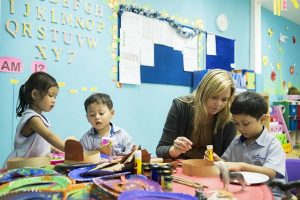
children in a preschool classroom
Preschool teaches kids social skills

Socialization is the most obvious benefit of early childhood education. When a child attends preschool, they learn how to socialize, cooperate, share, and form friendships. They learn to communicate with other adults outside of their family. If your child learns to socialize at a young age, it will be easier for them to develop a healthy self-esteem.

Nurtures All Aspects of a Child’s Development

Early childhood education nurtures a child’s emotional, social, physical, and mental development. Teachers of early childhood education are trained to nurture each of these areas by focusing activities on them. Interaction with other children also nurtures these areas.

Sparks Motivation for Lifelong Learning

At the preschool age, a child is the most inquisitive. Preschool activities are intended to be fun and hands-on. When a child realizes that learning is fun, they will have a positive attitude about learning throughout their lifetime. They will also keep the motivation to learn.

Helps a Child Develop Respect

Early childhood education helps prevent disrespect because it teaches and promotes respect. In preschool, a child learns the value of respecting authority figures and peers. Respect is taught in preschool by enforcing manners. This includes, “Please” and “Thank you”, as well as not talking when the teacher is giving directions, and speaking to their peers in a respectful tone.

Teaches Effective Teamwork

Teamwork is a skill your child will need to have in school, recreation, and the workplace. Preschool sets the foundation to make a child an employable adult by practicing teamwork daily.

Teaches Concentration and Patience

When a child is at home, they can move from one activity to another. When they need a snack or a drink at home, they get it right away. In preschool, a child must focus on a project or an activity for the time set and allowed by the teacher. They need to wait to express their hunger, thirst, or restroom needs. This will prepare them for elementary school because they have to stay focused on their classwork and be patient.

Exposes a Child to a Variety of Different Types of People

When a child is limited to the company of family/friends, they are most likely exposed to the same type of people. When a child enters preschool, they see an array of different religions, ethnicities, and cultures. This helps teach a child the concept of tolerance early on in life.

Preschool Achievement Gap

preschool children in a classroom
Children who attend preschool are likely to be successful

The children who are not receiving the same quality preschool education as other children are not reaping the developmental and educational benefits. This causes an achievement gap later on between the children who attended preschool and the children who did not. The children who did not attend preschool are behind in their learning and development when they start elementary school.

Unfortunately, issues including low-income, poverty, and a lack of quality preschool program availability in certain areas play a significant role in the existence of the preschool achievement gap.

You can help close the preschool gap by taking advantage of enrolling your child into an early childhood education program. This will ensure your child is not behind when they get to kindergarten and first grade. There is trustworthy preschool in Jackson, Michigan.

The Importance of Early Childhood Education

Early childhood education is important because of the numerous short-term and long-term benefits. It introduces topics which will be taught in kindergarten and elementary school, including art, math, and language. This will give your child a strong educational foundation. Early childhood education is a complement to all the valuable skills and nurturing a child receives at home. Preschool takes what they learn at home a step further by teaching your child to apply those skills and values when working with other adults and children. Both a positive home environment and a quality preschool work together to make a child well-rounded.

Long Term Benefits of Early Childhood Education

Higher Earnings

The HighScope Perry Preschool Study remarkably showed that adults, who were enrolled in a quality early education program as young child, earned approximately $2,000 dollars more a month. This totals up to $24,000 more a year than adults who were not enrolled in a quality early education program as a child.

More Desirable to Employers

Preschool teaches skills such as teamwork, respect, cooperation, patience, and moral development. Adults who attended preschool as young children are more desirable to employers because they have had the qualities an employer is seeking from the time they were young children.

Less Likely to Commit Crimes

When a child is taught morals early on in life, they are more likely to keep them throughout life. Studies show children who attended preschool were less likely to externalize criminal behaviors such as lying, stealing, and aggression.

More Academically Motivated

According to IQ tests, children who attended a quality preschool program tended to have higher IQ scores than the children who did not. In addition, these children were more likely to graduate high school, attend college, and be more motivated about academics in general.

Longer Marriages

siblings in a preschool
Children who attend preschool have more fruitful relationships

Adults who attended preschool as children are more likely to have longer, more successful marriages. This may be because they earn more money, are less likely to commit crimes, and are better at teamwork and communication.

Preschool vs. No Preschool Statistics

The statistics prove early childhood education has lifelong benefits on children.
• Children who did not attend preschool are 25 percent more likely to drop out of high school
• Children who did not attend preschool are 40 percent more likely to become a parent in their teenage years
• Children who did not attend preschool are 60 percent more likely to not pursue higher education
• Children who did not attend preschool are 70 percent more likely to be arrested for a violent crime

Though early education comes at a price, the price is not as high as the outcomes for the children who did not attend preschool. The numbers do not lie. They are proof that early childhood education has a significant impact on a child’s life.

Conclusion

Early childhood education is critical for a child. You do not want your child to be a part of the preschool gap, and left behind when they get to elementary school. You do not want your child’s adulthood to be negatively impacted because of not making a simple early decision to enroll them in a quality preschool. The short and long-term benefits, and the effect it has on a child’s outcome, prove that you have nothing to lose and everything to gain by enrolling your child into an early childhood education program.

Filed Under: Holidays

  • « Previous Page
  • 1
  • …
  • 3
  • 4
  • 5
  • 6
  • 7
  • …
  • 9
  • Next Page »

CHECK AVAILABILITY

Photo of Best Childcare School

Young Scholars Academy
5815 Tutt Center Point
Colorado Springs, CO 80922
(719) 626-9650
Mon - Fri 6:00am - 6:00pm

DRIVING DIRECTIONS

Follow Us

Summer Camp Signup!
Programs
Review Us Online

Categories

  • Activities
  • After School
  • Art Projects
  • Calendar
  • Events
  • Family Tips
  • General Updates
  • Health & Wellness
  • Holidays
  • Newsletters
  • Pre-Kindergarten
  • Preschool
  • Programs & Curriculum
  • Email Login
  • Disclosures
  • Site Map
  • No Joke Childcare
  • Admin Login
  • Contact Us
  • Updates Simplified

5815 Tutt Center Point Colorado Springs, CO 80922, (719)522-9099

Copyright 2026 Young Scholars Academy All Rights Reserved.

Email Login| Site Map| No Joke Marketing For Childcare| Contact Us| Updates Simplified