 5815 Tutt Center Point - Colorado Springs, CO 80922

How structured routines improve toddler behavior in daycare begins with helping young children feel safe, secure, and prepared for what comes next. Toddlers thrive when their day includes predictable moments for learning, play, meals, rest, and transitions.
These routines reduce uncertainty, support emotional regulation, and make it easier for children to follow expectations with confidence. In a nurturing childcare environment, structure does not limit a child’s curiosity. Instead, it gives them the steady foundation they need to explore, build independence, and develop positive social habits with teachers and peers.
Toddler Daycare Routine Benefits for Daily Confidence
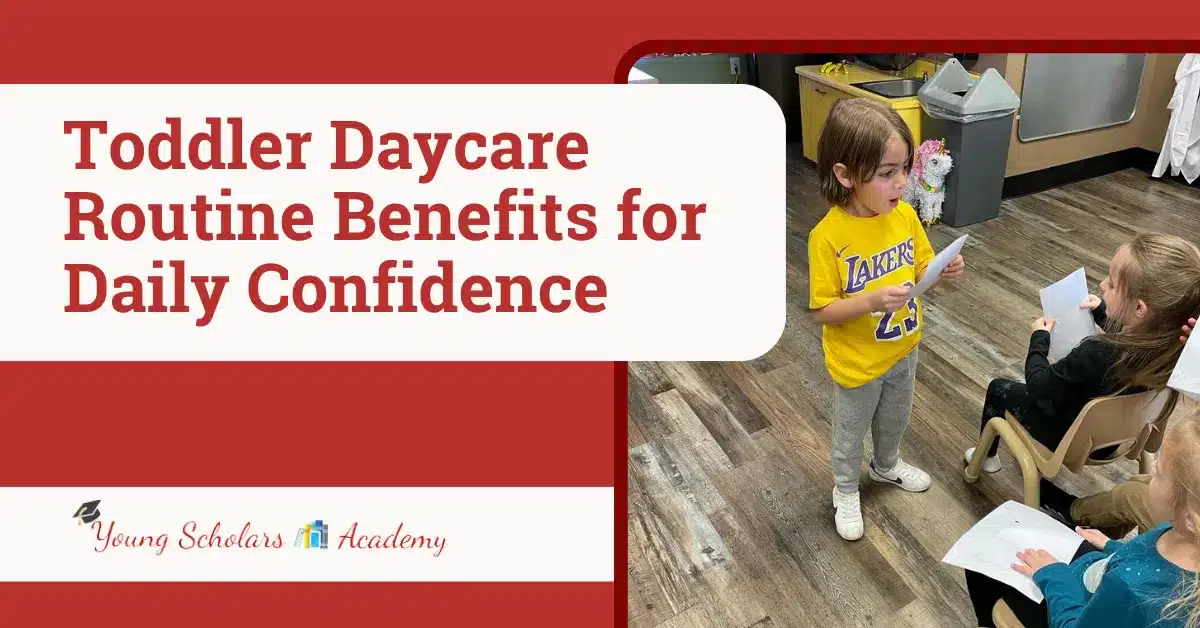
Toddlers feel more secure when their day follows a steady rhythm. In a daycare setting, consistent routines help children understand what to expect, how to participate, and how to move through each part of the day with greater confidence.
A Predictable Day Helps Toddlers Feel Secure
Young children are still developing emotional regulation and independence. When daily moments happen in a familiar order, such as arrival, playtime, meals, rest, and outdoor activities, toddlers begin to feel more comfortable in their environment. This predictability can ease separation from parents, reduce uncertainty, and help children trust the caregivers guiding them.
Simple Routines Build Independence
Daily routines give toddlers repeated opportunities to practice age-appropriate skills. Over time, small steps become familiar habits that support confidence and responsibility.
These may include:
- Washing hands before meals
- Cleaning up toys after play
- Sitting with friends during snack time
- Preparing for rest time
- Following simple classroom directions
Each routine helps children feel capable because they begin to recognize what they can do on their own with gentle support.
Structure Supports Positive Behavior
A well-planned routine can also reduce challenging behaviors. When toddlers know what comes next, transitions feel less overwhelming, and expectations become easier to understand. Instead of relying only on correction, teachers can use the routine itself as a supportive guide.
At Young Scholars Academy, this kind of structure is paired with warmth, patience, and meaningful interaction. Children are encouraged to participate in ways that feel safe, respectful, and developmentally appropriate.
Confidence Grows Through Daily Repetition
The benefits of toddler routines build gradually. Each successful transition, completed task, and familiar classroom moment helps children feel more prepared for the next part of the day. With consistent guidance, toddlers gain the confidence to explore, connect with others, and develop a positive relationship with learning.
Managing Toddler Transitions in Daycare With Less Stress
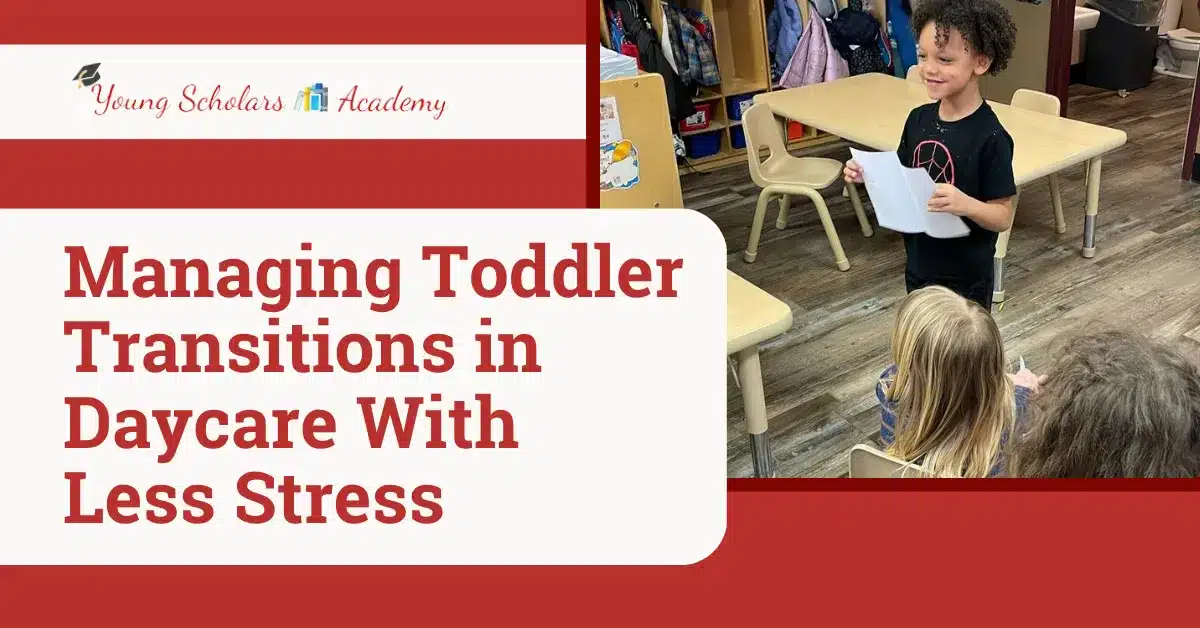
Transitions can be challenging for toddlers because they often involve stopping one activity, shifting attention, and preparing for something new. In a daycare setting, supportive transition routines help children move through the day with less stress and more confidence.
Clear Cues Help Children Prepare
Toddlers respond well when given simple, consistent signals before a change. A teacher may use a song, a visual cue, a gentle reminder, or a countdown to help children understand that one part of the day is ending and another is beginning. These cues make transitions feel more predictable instead of sudden.
Helpful transition cues may include:
- A cleanup song before moving to the next activity
- A visual schedule showing the day’s routine
- A five-minute reminder before outdoor play ends
- A familiar phrase used before meals or rest time
Gentle Guidance Reduces Resistance
Many toddler behaviors during transitions come from feeling rushed, confused, or emotionally attached to the current activity. When teachers guide children with patience, transitions become more manageable. A calm tone, simple instructions, and positive encouragement can help toddlers feel supported rather than pressured.
For example, instead of focusing only on stopping play, a teacher can help the child understand what comes next: “First we clean up, then we wash our hands for lunch.” This type of guidance gives toddlers a clear path forward.
Predictable Transitions Support Cooperation
When transitions happen the same way each day, toddlers begin to recognize the pattern. Over time, they may start preparing on their own, such as putting toys away, lining up, or gathering their belongings with less prompting.
A Calmer Day Supports Better Behavior
At Young Scholars Academy, routines are designed to help children feel safe, cared for, and ready for each part of the day. Thoughtful transitions support a more peaceful classroom environment where toddlers can focus on learning, playing, and building positive relationships.
Behavior Consistency in Early Childcare Builds Trust
Consistent behavior expectations help toddlers feel secure in their childcare environment. When children receive steady guidance from caring teachers, they begin to understand what is expected, how to respond, and how their choices affect the classroom community.
Clear Expectations Create Emotional Safety
Toddlers are still learning how to manage big feelings, share space with others, and follow simple directions. When expectations remain consistent, children are not left guessing what is acceptable from one moment to the next. This emotional safety helps reduce confusion and gives toddlers the confidence to participate more peacefully.
Consistent expectations may include:
- Using gentle hands with friends
- Taking turns during play
- Sitting safely during meals
- Cleaning up after activities
- Listening when a teacher gives a direction
These repeated expectations become familiar over time, helping children develop self-control and awareness.
Teacher Responses Shape Positive Habits
Consistency does not mean every child is treated the same in every moment. It means teachers respond with the same calm, supportive approach while considering each child’s age, needs, and development. A toddler who is struggling may need a reminder, a redirection, or help naming their feelings.
When teachers respond with patience instead of frustration, children learn that adults are dependable. This trust allows toddlers to accept guidance more easily and feel safe asking for help.
Routines Reinforce Better Choices
Behavior consistency works best when daily routines support it. Familiar classroom rhythms help toddlers understand when to listen, when to play, when to rest, and when to transition. As these patterns repeat, positive behaviors become easier to practice.
Trust Grows Through Steady Guidance
At Young Scholars Academy, consistent care is part of creating a nurturing learning environment. Through warm communication, predictable routines, and age-appropriate support, toddlers build trust with their teachers and feel more secure in the classroom. This foundation helps them develop confidence, cooperation, and a stronger sense of belonging.
How Structured Routines Support Social Development
Social development is an important part of a toddler’s growth, and structured routines provide children with daily opportunities to practice interacting with others. In a daycare setting, predictable group activities, shared responsibilities, and guided play help toddlers learn how to connect, communicate, and participate in a classroom community.
Group Routines Encourage Cooperation
When toddlers take part in regular classroom activities, they begin to understand what it means to be part of a group. Circle time, cleanup, meals, and outdoor play all create natural moments for children to practice cooperation.
These routines help toddlers learn to:
- Wait for a turn
- Share materials with friends
- Listen while others are speaking
- Follow simple group directions
- Participate in activities alongside peers
With consistent practice, these small social skills become more familiar and easier to use throughout the day.
Predictability Supports Peer Interaction
Toddlers often feel more comfortable engaging with others when the environment feels secure. A familiar routine reduces uncertainty, which can make children more open to playing, exploring, and communicating with classmates.
For example, when children know that outdoor play follows snack, they may begin to look forward to seeing friends on the playground. Repeated shared experiences help toddlers build early friendships and develop a sense of belonging.
Teacher Guidance Helps Children Build Social Skills
Teachers play an important role in helping toddlers understand social expectations. Through gentle modeling, reminders, and encouragement, children learn how to use kind words, respect personal space, and respond to others with care.
Daily Structure Builds a Caring Classroom Community
At Young Scholars Academy, routines are designed to support both learning and connection. Each predictable part of the day gives toddlers a chance to practice positive social behavior in a warm, nurturing environment. Over time, structured routines help children grow more confident in their relationships, become more aware of others, and become better prepared to participate in group learning experiences.
Conclusion
Structured routines do more than organize a daycare day. They help toddlers feel safe, supported, and confident as they learn to navigate daily activities, manage emotions, interact with others, and follow expectations. When routines are paired with patient guidance and warm teacher support, children begin to understand their environment and develop skills that support both behavior and learning.
To learn more about toddler care and early learning at Young Scholars Academy, call (719) 522-9099 or visit https://youngscholarsacademycolorado.com/contact-us/ to connect with their team.